Making effective decisions is a cornerstone of professional and personal success. Yet, many people struggle to approach problems methodically, relying instead on intuition, habit, or incomplete information. Poor decision-making can lead to missed opportunities, inefficiencies, and avoidable mistakes. Developing critical thinking and problem-solving skills equips individuals to analyze information systematically, identify potential obstacles, and implement effective solutions. By improving these skills, employees can make more informed decisions, enhance productivity, and contribute positively to organizational outcomes [1].
Critical thinking involves the ability to evaluate evidence, consider alternatives, and anticipate consequences before making a choice. It requires a disciplined approach to questioning assumptions, identifying biases, and weighing options logically. Problem-solving focuses on taking structured actions to overcome challenges, whether operational, strategic, or interpersonal. Together, these skills enable employees to navigate complex situations with confidence, improving both individual and team performance [1].
The Importance of Critical Thinking and Problem Solving in the Workplace
Organizations today face increasingly complex challenges, from rapidly changing markets to evolving technology and regulatory requirements. Employees who can think critically and solve problems effectively are better equipped to adapt to these changes. Research indicates that companies that foster critical thinking and problem-solving skills report higher levels of innovation and overall organizational performance [2].
Critical thinking also reduces errors and supports ethical decision-making. When employees systematically evaluate information and consider alternative viewpoints, they are less likely to make hasty or biased decisions that could harm the organization. Structured problem-solving approaches can streamline workflows, improve collaboration, and increase efficiency by identifying the root cause of issues rather than merely addressing symptoms [2].
Common Barriers to Effective Decision-Making
Despite the clear benefits, many employees struggle with decision-making due to common barriers. Cognitive biases, such as confirmation bias or overconfidence, can skew perception and limit objectivity. Incomplete or inaccurate information may also result in flawed conclusions. Organizational pressures, time constraints, and hierarchical communication can further complicate the decision-making process.
Another common challenge is the tendency to rely on habitual thinking rather than engaging in deliberate analysis. When individuals repeat past behaviors without evaluating outcomes or considering alternatives, they risk perpetuating inefficiencies and missed opportunities. Overcoming these barriers requires both awareness and deliberate practice, guided by structured frameworks for thinking and problem-solving [1].

Strategies for Developing Critical Thinking and Problem-Solving Skills
Developing these skills requires deliberate practice and a combination of analytical and reflective approaches. Key strategies include:
- Ask the right questions – Begin by clarifying the problem, identifying assumptions, and gathering relevant information before seeking solutions.
• Consider multiple perspectives – Evaluate alternative viewpoints to broaden understanding and reduce bias.
• Break problems into manageable components – Decompose complex challenges into smaller, actionable parts to identify root causes and prioritize solutions.
• Use evidence-based decision-making – Base conclusions on data, research, and verified information rather than intuition alone.
• Reflect and learn from outcomes – After implementing a solution, review results and assess what worked or what could be improved to build future proficiency [2].
These strategies enhance individual decision-making and strengthen team dynamics, as employees can approach group challenges with structured reasoning and collaborative problem-solving.
Practical Applications in the Workplace
Employees who master critical thinking and problem-solving skills can apply them in a wide range of workplace scenarios. Examples include:
- Analyzing project risks and developing contingency plans
• Evaluating process inefficiencies and recommending improvements
• Resolving interpersonal conflicts with logical and objective approaches
• Making data-informed strategic decisions that align with organizational goals
Organizations that prioritize these skills often see measurable improvements in productivity, employee engagement, and operational efficiency. By training employees to assess situations, identify options, and implement solutions systematically, companies can create a culture of proactive problem-solving and informed decision-making [3].
Integrating Live Instructor-Led Learning
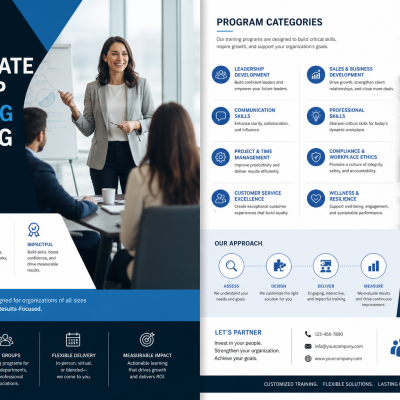
While self-study and online resources can provide foundational knowledge, structured training with expert guidance often leads to more rapid and sustained skill development. Skill Rise 360 offers the live instructor-led course Critical Thinking and Problem Solving for Everyday Decisions, designed to help participants apply these skills in real-world scenarios.
This course provides interactive exercises, case studies, and collaborative problem-solving challenges that allow learners to practice analyzing complex situations, questioning assumptions, and evaluating alternatives. Participants also gain frameworks and tools for structured decision-making, which they can apply immediately in their daily work. The live instructor-led format ensures learners receive personalized feedback and can discuss challenges with peers and experts, enhancing the learning experience and improving long-term retention.
By participating in this course, employees develop not only critical thinking and problem-solving capabilities but also confidence in their decision-making. Organizations benefit from a workforce that can address challenges efficiently, innovate effectively, and contribute to better outcomes across teams and departments.

Final Thoughts
In today’s dynamic workplace, the ability to think critically and solve problems effectively is essential. Employees who cultivate these skills are better equipped to navigate complexity, reduce errors, and make informed, impactful decisions. When supported by structured learning such as the Skill Rise 360 live instructor-led course Critical Thinking and Problem Solving for Everyday Decisions, organizations can strengthen their talent pipeline, foster innovation, and enhance overall performance. This combination of skill development and practical application positions both employees and organizations for long-term success [1][2][3].
Frequently Asked Questions
What is the difference between critical thinking and problem solving?
Critical thinking is the ability to evaluate information, question assumptions, and consider alternatives, while problem-solving focuses on taking structured actions to address challenges effectively. Both skills work together to enhance decision-making.
How can I improve my critical thinking skills at work?
Start by asking probing questions, considering multiple perspectives, analyzing evidence, and reflecting on outcomes. Practice applying structured frameworks to real workplace problems to reinforce learning.
Why is live instructor-led training more effective than self-paced learning?
Live training provides interactive exercises, immediate feedback, and opportunities for peer discussion. This approach enhances understanding, retention, and the ability to apply skills to real-world situations.
Endnotes
- Paul, R., & Elder, L. The Miniature Guide to Critical Thinking Concepts and Tools. Foundation for Critical Thinking, 2022.
- McKinsey & Company. The State of Decision Making in the Workplace. 2023.
- ATD Research. Developing Critical Thinking and Problem-Solving Skills in Employees. 2025.